
The best English in the region
English is a link language in Sri Lanka – in schools, offices and tourism. Instructions, health and safety briefings and guest contact work from day one, without an interpreter on every shift.


 Recruitment from Sri Lanka
Hospitality, catering, manufacturing, warehousing and construction – candidates with national NVQ certificates and experience from the UAE, Qatar, South Korea and the Maldives, with the strongest English in South Asia. We run the whole process: recruitment in Colombo, candidate verification, sworn translations and onboarding – usually in 1–3 months.
Sri Lanka · South Asia
Sri Lanka is an outlier in South Asia: the highest literacy rate in the region, English as a link language and a national NVQ qualification framework that can be verified with documents. We work with trusted local partners who verify every candidate's identity and certificates, and each candidate is covered by insurance before departure.
This direction is chosen by companies where conversation matters: hotels and catering, plants running English-language instructions, warehouses operating on a system, and construction. The candidate pool is smaller than in India or Bangladesh – which is why we work here with carefully matched teams of 5–30 people rather than mass intakes. We run both administrative tracks in parallel: one schedule, one budget, one coordinator.
1–3
months from contract to arrival
~92%
literacy rate – the highest in the region
1–7
levels of national NVQ qualifications
100%
legal employment and residence
Other directions
We also recruit from Philippines, India, Nepal, .
See all directionsBenefits
English is a link language in Sri Lanka – in schools, offices and tourism. Instructions, health and safety briefings and guest contact work from day one, without an interpreter on every shift.
A national qualification framework (NVQ 1–7) supervised by TVEC, with training from NAITA and VTA. The certificate level maps directly onto the role a candidate can fill.
A country living off tourism trains cooks, kitchen porters, waiters and housekeeping staff in dedicated hotel schools – with a real service culture, not just theory.
We verify identity, NVQ certificates and references directly with local partners and issuing bodies, and every candidate is covered by insurance before travel. Far less risk on the sending side.
Candidates come for multi-year contracts and to support family at home. The work culture is gentle and collaborative – you can feel it on the shop floor.
This direction works best for teams of 5–30 people matched to a specific role, where candidate quality matters more than sheer scale.
Qualifications
The Sri Lankan qualification system is formalised and can be verified with documents. Every profile you receive includes a scan of the NVQ certificate or diploma, employment certificates from previous contracts and an assessment of English level.
NVQ (levels 1–7)
The national qualification framework supervised by TVEC. The certificate confirms genuine occupational competence after an examination – welding, electrics, mechanics, machine operation, industrial tailoring, catering and hospitality. The level maps directly onto the role.
NAITA and VTA
The National Apprentice and Industrial Training Authority and the Vocational Training Authority run apprenticeships and courses across the country. An apprenticeship certificate means the candidate actually worked on a machine, not just attended lectures.
References from the Gulf, Korea and the Maldives
Employment certificates from the UAE, Qatar, Kuwait, South Korea, Israel and Maldivian hotels – proof of work under H&S regimes, on shifts and to international chain standards.
The region of origin genuinely shapes the professional profile and language – we match it to the role.
Colombo and Gampaha
The port and industrial conurbation – logistics, warehousing, garments, catering and hospitality. The best English and the shortest route through formalities.
Kandy and the central region
Tourism hinterland and hotel schools – cooks, waiters, housekeeping, plus crafts and finishing trades.
Kurunegala and Puttalam
Agriculture, food processing and light manufacturing – candidates used to physical, seasonal and team-based work.
Galle, Matara and the south
Tourism, fishing and fish processing plus construction – many candidates with Gulf contract experience.
Jaffna and the north
The Tamil region – construction and production candidates, often with very good English and prior migration experience.
We run the process in five stages: needs analysis, quotation and contract, recruitment in Colombo, interviews and trade tests with client approval, sworn translations and preparation, and relocation. Each stage has a clear deadline and a full document set – below you can see step by step what happens, how long it takes and who covers the costs.
4–5 mo.
from contract to the first day at work
5 stages
one coordinator runs the entire process
100%
compliance with Ukrainian and Sri Lankan requirements
Process stages
Needs analysis, role profile, quotation and schedule. The process only starts once the contract is signed.
Needs analysis
Week 1We define duties, required certifications, pay, shift system and accommodation standards.
Quotation and schedule
Week 1–2A full budget, dates for each stage and planned arrival batches.
Contract signing
Week 2Employer agreement and job description in English, launching recruitment in Sri Lanka.
Sourcing and verification by a licensed partner – experience, references, NVQ certificates and an English assessment.
Pre-selection with a licensed partner
Week 2–4Our Colombo partner sources candidates and verifies references from contracts in the UAE, Qatar, Kuwait, South Korea and Israel.
Shortlist and selection
Week 3–5We present a shortlist of verified profiles including an English assessment. The decision is yours; video interviews on request.
Interviews, practical trade tests and document verification – run in parallel with recruitment in Sri Lanka.
Document preparation
Week 3–4Company data, employment conditions and declarations – checked for compliance before filing.
Interviews and trade tests
Week 4–7Practical trade tests and reference checks for shortlisted candidates.
Client approval
Week 4–8We present the verified shortlist for client approval; review usually takes 2 to 4 weeks.
Sworn translation of certificates and work history, medical checks and insurance, and preparation of flights.
Sworn translations
Week 8–12Sworn translation of NVQ certificates and work history, and insurance arrangements for the candidate.
Medical checks and flight booking
Week 12–16Examinations at an accredited clinic in Colombo, full documentation and booking flights from Colombo.
Flights from Colombo, accommodation and onboarding at the workplace.
Flights and transfer
Week 16–20Booking flights from Colombo (usually via the Gulf or Istanbul), airport transfer and a coordinator meeting the group.
Accommodation and registration
First weekHousing compliant with sanitary requirements, residence registration and a bank account and a bank account.
H&S training and onboarding
First weekHealth and safety training and instructions in English, an assigned buddy on the floor and first days under supervision.
Care and a 90-day review
Month 1–3Ongoing contact with the coordinator, support with residence matters and a review of the cooperation after three months.
Typical timeline
From contract to the first day of work – usually 1–3 months
Needs analysis, quotation and contract
01Recruitment and pre-selection in Colombo
02Interviews, trade tests and client approval
03Sworn translations and insurance
04Medical checks and flight booking
05Arrival and first day at work
06Cost of employment
Agency fee
EmployerSourcing, verification and coordination of the whole recruitment process.
Sworn translations and insurance
Employer / agencySworn translation of NVQ certificates and work history, plus travel insurance for the candidate.
Medical checks
Employer / agencyMedical checks at an accredited clinic in Colombo.
Flight and relocation
EmployerAir ticket from Colombo, airport transfer, initial accommodation and starter kit.
Onboarding and post-arrival care
Employer / agencyResidence registration, bank account, H&S training and coordinator support in the first months.
Agency fee
EmployerRecruitment, handling the administrative process on both sides and coordinator care after arrival.
We do not quote a single price per worker – the budget depends on the role, headcount and region. It always consists of the same items, however, so you can compare agency offers without hidden costs. Sworn translations and medical checks are built into the quotation from the start.
Ready to start
Industries
Sri Lanka is an economy of tourism, tea and garments, with well-developed vocational education and English in everyday use. Below are the industries where this direction delivers the strongest results.
The strongest side of this direction. Sri Lanka lives off tourism, runs a network of hotel schools and has staff returning from hotels in the Maldives and the Gulf – with English and a genuine service culture.
Apparel is a pillar of Sri Lankan exports, with plants producing for premium brands. Candidates know quality standards, inspection routines and machine work.
Tea, spices, rubber and fish processing – candidates are used to sanitary regimes, shift work and repeatable line processes.
Colombo is one of the largest transhipment ports in South Asia, so warehouse and port experience here is real rather than declarative.
Many candidates return from contracts in the UAE, Qatar and Kuwait – from sites with high safety requirements and a demanding climate.
Anywhere conversation matters – with a guest, a supervisor or a WMS terminal. Thanks to English, Sri Lankan workers grow into independent roles faster.
Not every direction fits every plant. If you need to fill several dozen positions at once, tell us at the outset – at large scale India or Bangladesh are often more effective, while Sri Lanka is where communication and guest contact matter most.
Positions
The strongest side of this direction is hospitality and catering, along with roles where communication counts: system-driven warehousing, quality control, team leaders. Technical profiles with NVQ certificates are also available – welders, electricians and machine operators. Video interviews with candidates are arranged on request.
Need larger scale or a strictly technical workforce? See also workers from India, workers from Bangladesh or workers from Nepal.
A comparison of typical differences in process and candidate profile.
| Criterion | Sri Lanka | Other directions |
|---|---|---|
| Candidate profile | Hospitality, catering, light industry, manufacturing and construction | More often purely industrial profiles |
| English proficiency | Good – English is a link language | Varied, often basic |
| Process duration | 1–3 months | 1–3 months (without additional entry formalities directions) |
| Candidate availability | Good for groups of 5–30 | Very large for groups of 50+ (Bangladesh, India) |
| Verification depth | NVQ certificate checks and practical trade tests | Basic reference checks |
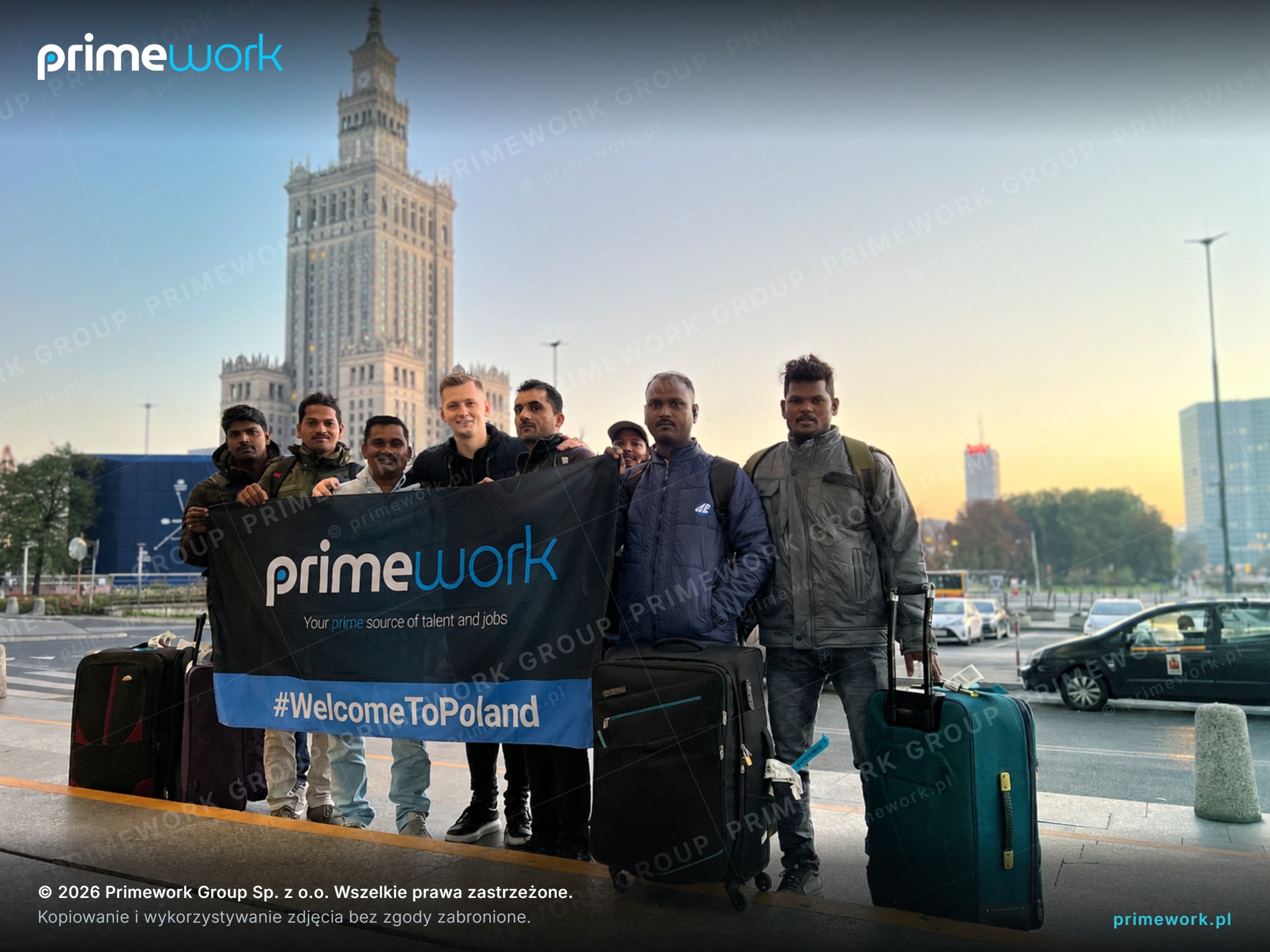
Cultural integration
Sri Lankan teams settle in calmly and quickly find their place in a company structure, but the first weeks decide whether a worker stays for years. A few simple organisational decisions shorten onboarding and clearly reduce first-year turnover.
Communication and accent
English is a strength here, but accent and pace of speech can surprise. Short written instructions, pictograms and a basic language course solve it within weeks.
Cuisine and holidays
Candidates are often vegetarian or eat heavily spiced food. Access to a kitchen and spices costs little, and factoring Buddhist holidays and the Tamil New Year into the roster is very well received.
First winter and acclimatisation
Sri Lanka has an equatorial climate – a winter clothing pack, a briefing on weather and commuting and coordinator support in the first weeks are essential.
Family contact and finances
Help with opening a bank account and low-cost transfers to Sri Lanka, plus stable internet in the accommodation – this measurably reduces first-year turnover.
Short answers to the most common questions about recruiting workers from Sri Lanka.
Sri Lanka has the highest literacy rate in South Asia (around 92%) and a well-developed national vocational qualification system (NVQ). English is a link language used in schools, administration and the entire tourism industry, so candidates communicate noticeably better than the regional average. It is the right direction for companies that value calm, structured teams and roles involving guest contact or English-language instructions – hotels, catering, manufacturing, warehousing and construction.
1) Needs analysis, quotation and contract, 2) recruitment and verification of candidates in Colombo and Kandy – experience, references and NVQ certificates, 3) interviews and practical trade tests, sworn translations and client approval of the profiles, 4) medical checks, flights and airport transfer, 5) arrival, accommodation and onboarding with a dedicated coordinator.
Realistically 1–3 months from signing the contract to the first day at work. Sourcing and candidate verification are usually the longest stages, followed by sworn translations and medical checks. For larger groups the stages overlap, so later batches arrive faster.
We work only with trusted local partners in Colombo and Kandy who verify identity, NVQ certificates and references directly with the issuing bodies, and every candidate is covered by insurance before travel. For the employer this means transparent documentation and a much lower risk of dishonest intermediaries.
English has the status of a link language in Sri Lanka and is present in schools, public administration and the whole tourism sector. Candidates from hospitality and catering often speak fluently, production candidates at a communicative level. We always verify the level during the interview and describe it in the candidate profile; for larger groups we appoint a team leader who acts as an interpreter.
The basis is the national NVQ framework (levels 1–7) supervised by TVEC, with training delivered by NAITA and VTA – for welders, electricians, mechanics, machine operators, tailors, cooks and hospitality staff. On top of that come references from contracts in the UAE, Qatar, Kuwait, South Korea and Israel. We verify qualifications with documents before presenting a candidate.
Hospitality and catering above all (thanks to English and a service culture), the garment industry and light manufacturing, food production and processing, warehousing and logistics, and construction and finishing works. They also perform well in agriculture and horticulture – this is an economy built on tea, rubber and spices.
The budget consists of the agency fee, sworn translations and document verification, medical checks and insurance, the flight from Colombo and airport transfer, accommodation and onboarding. We present a precise calculation for the specific role and headcount before the process starts – with no hidden items.
Yes. Pay and other employment conditions match what is agreed in the contract and are transparent from the first quote
The standard is accommodation provided by the employer or the agency. We arrange flights from Colombo, airport transfer, housing that meets sanitary requirements, residence registration, a and a bank account. We also suggest simple cultural solutions: access to a kitchen and spices, vegetarian options and accounting for Buddhist and Tamil holidays in the roster.
Noticeably better English and a higher level of general education, and a strong hospitality and catering profile. In exchange, the candidate pool is smaller than in India or Bangladesh – this is a direction for teams of five to thirty people rather than for filling a hundred positions at once.
Within the agreed trial period we provide a free replacement. Throughout the contract one coordinator looks after your company and the team, reacting to issues before they turn into turnover.
Direction: Sri LankaWe start with a conversation about your needs, a quotation and a contract. Only then do we launch recruitment in Colombo, interviews and trade tests, sworn translations and client approval – with an agreed arrival schedule.
Realistic time from contract to the first day at work: 1–3 months.